Chill
"The day has finally taken its coat off."
For decompression, late nights, focus, soft rooms, smoky air, after-hours thinking.
Chill isn't background music. It's the sound of your shoulders coming down. A record for the hour when the phone stops buzzing and the light goes amber, when the room agrees to keep a secret.
This mode lives in the low end - brushed drums, upright bass, a Rhodes held one bar too long. It's Massive Attack humming under Portishead's cigarette. It's a Dilla loop that forgot to end. It's the space between two thoughts you haven't finished having.
Put it on when the work is done, or when you want it to be. Chill doesn't ask you to move. It asks you to stay.
Where this mode comes from
Chill was born in the smoke-hung basement clubs of Bristol in the early '90s - a city where Jamaican sound-system culture, punk politics, and hip-hop crate-digging collided in one damp postcode. Trip-hop was the byproduct: slowed breakbeats, dub bass, film-noir strings. Massive Attack, Portishead, and Tricky weren't chasing a genre; they were scoring the come-down.
In parallel, a generation of American producers - J Dilla in Detroit, Madlib in Oxnard, Nujabes in Tokyo - took the same hush and pushed it further into the MPC. The result is a global lineage of after-hours music that refuses urgency. It is the sound of interior weather.
How the mode moves through a record
Entry
Low and warm. The record enters at conversational volume; the first minute is atmosphere, not statement.
Middle
A groove settles in and stays. Chill records don't build - they deepen. The listener acclimates rather than escalates.
Exit
Fades or dissolves rather than resolves. You should feel like the room got quieter, not that a song ended.
What this mode actually sounds like
Slow tempos (60–90 BPM), swung MPC drums, dusty samples, warm tape hiss, Rhodes and Wurlitzer keys, upright bass that breathes, unhurried vocals mixed slightly behind the beat.
Tempo
60–90 BPM. Head-nod, never hurried. The bar has room to sit down in.
Rhythm
Swung, MPC-quantized hip-hop drums or brushed jazz kit. Ghost notes on the snare. Kick barely above the floor.
Texture
Analogue warmth: tape saturation, vinyl crackle, a Rhodes chord left ringing one beat too long.
Low end
Round upright bass or a soft sub. Present, never aggressive. You feel it in the chest, not the ears.
Voice
Half-whispered, close-mic'd, mixed just behind the beat so it feels like it's already in the room.
Space
Long reverb tails, dub delays, pockets of silence used as instruments.
Listen for
- - Massive Attack - Teardrop
- - Portishead - Roads
- - D'Angelo - Feel Like Makin' Love
- - J Dilla - Two Can Win
- - Nujabes - Aruarian Dance
Individual songs that carry the mode in one play.
Cornerstone records
- - Massive Attack - Mezzanine
- - Portishead - Dummy
- - Bill Withers - Just As I Am
- - J Dilla - Donuts
- - Nightmares On Wax - Smokers Delight
Full-length albums that define the crate.
Records for this mode
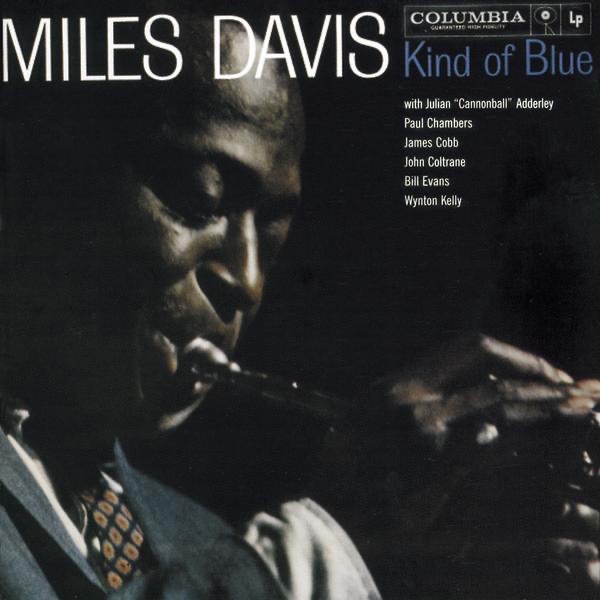
Kind of Blue
Miles Davis

In Rainbows
Radiohead

The Low End Theory
A Tribe Called Quest

Buena Vista Social Club
Buena Vista Social Club

Aja
Steely Dan

Pet Sounds
The Beach Boys

Graceland
Paul Simon

Blue Lines
Massive Attack

Selected Ambient Works 85-92
Aphex Twin

Music Has the Right to Children
Boards of Canada
Sound Sommelier pairings
Kind of Blue · Miles Davis
White Burgundy
"Cool, balanced, classic, restrained, and endlessly layered."
In Rainbows · Radiohead
Friulian Orange Wine
"Textured, cerebral, strange, beautiful, and intimate."
Loveless · My Bloody Valentine
Lambrusco Secco
"Fizz through fog. Sweet noise, dry fruit, everything blurred."
Getz/Gilberto · Stan Getz & João Gilberto
Vinho Verde
"Barefoot music, barefoot wine. A breeze from the coast either way."
Not sure where to start?
Ask Jelena for Chill