Deep Cut
"Somebody made this. Almost nobody heard it."
For collectors, rare finds, crate diggers, out-of-print records, forgotten genius.
A deep cut is a record that survived by accident. A private-press soul 45 pressed in a garage in Cleveland in 1974. A library-music LP from a French film that never came out. A Japanese city-pop sleeve someone paid $6 for and $600 the next year.
This crate is a small argument against the algorithm. It says: the canon is not the whole story. Somebody in Lagos, Tokyo, São Paulo, Detroit made something worth your ear, and the fact that you had to look for it is part of what makes it yours.
You don't play a deep cut to impress people. You play it because it's the truth of the evening, and you finally have the room for it.
Where this mode comes from
Deep Cut is less a genre than a stance - the collector's belief that the canon is a first draft. It threads through Japanese city-pop reissues (Haruomi Hosono, Tatsuro Yamashita), private-press American soul (Alice Clark, Darondo), European library music (Piero Umiliani, Alessandro Alessandroni), and the shelves of cult UK post-punk (Broadcast, Young Marble Giants).
The mode owes its current life to a small international network - Now-Again, Numero, Light in the Attic, Awesome Tapes From Africa - who spent two decades restoring records history had misfiled. What they proved is that great music is not scarce; it's just poorly indexed.
How the mode moves through a record
Entry
Slow, often strange. The first minute rewards patience - an unresolved intro, an odd instrument choice, a mix decision that shouldn't work and does.
Middle
The song reveals its logic. Deep cuts are often longer than they need to be, and that surplus is the point - a bridge that becomes the whole song, a solo that reroutes the record.
Exit
Rarely a hook you'll hum. More often a mood you carry for a week and can't quite describe to the friend you're about to play it for.
What this mode actually sounds like
Small pressings, unusual instrumentation, singular perspectives. Recording quirks kept in. Songs that were never trying to be hits and are better for it.
Provenance
Private-press LPs, library music, regional 45s, one-album wonders, out-of-print reissues under a thousand copies.
Arrangement
Unconventional song shapes. A four-minute intro. A vocal that arrives in the last minute. A key change that shouldn't work.
Instruments
The odd choice: a Mellotron flute, a nylon guitar in a soul band, a harp in a funk record, a Moog in a folk song.
Production
Room mics you can hear. Tape edits you can feel. The bass DI'd in a hallway. Charm baked into the fidelity.
Voice
Non-professional or under-the-radar singers who mean it more than they perform it.
Discovery
Serato-immune. Not on the playlist. Found on a wall, in a bin, in a footnote - and better for the search.
Listen for
- - Alice Clark - Never Did I Stop Loving You
- - Piero Umiliani - Mah Nà Mah Nà
- - Haruomi Hosono - Sports Men
- - Shuggie Otis - Strawberry Letter 23
- - Vashti Bunyan - Diamond Day
Individual songs that carry the mode in one play.
Cornerstone records
- - Alice Clark - self-titled (1972)
- - Haruomi Hosono - Pacific
- - Shuggie Otis - Inspiration Information
- - Piero Umiliani - Africa
- - Broadcast - Haha Sound
Full-length albums that define the crate.
Records for this mode




Sound Sommelier pairings
Illmatic · Nas
Barolo
"Young genius, tannic patience, tar and roses over concrete."
To Pimp a Butterfly · Kendrick Lamar
Amontillado Sherry
"Complex, wounded, brilliant, unafraid of the bitter finish."
OK Computer · Radiohead
Etna Rosso
"Cold volcanic anxiety. Beautiful, red, faintly smoking."
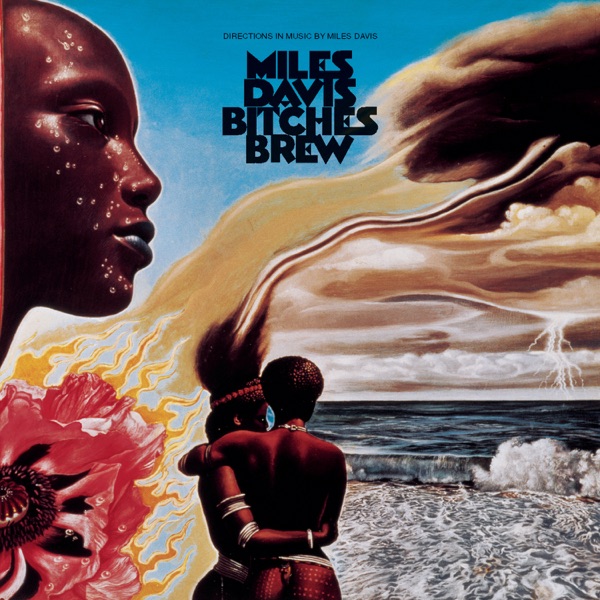
Bitches Brew · Miles Davis
Aged Barbaresco
"Free improvisation, tannic patience, smoke over rose."
Not sure where to start?
Ask Jelena for Deep Cut