Healing
"Not every record is trying to fix you. This one is."
For grief, restoration, reflection, spiritual reset, soft repair.
Healing is the mode we forget to name. It's Alice Coltrane's harp opening a room in your chest you didn't know was locked. It's Aretha at New Temple singing Amazing Grace like she's holding your hand across it. It's a Nils Frahm piano so quiet you have to lean in.
This crate doesn't perform joy. It doesn't demand you feel better. It just sits with you - patient, spiritual, unafraid of the silence between notes.
Play it on Sunday morning. Play it on the worst Tuesday of the year. Healing is the record that meets you where you actually are.
Where this mode comes from
Healing music has a specific ancestry: the Black American gospel church (Aretha's Amazing Grace at New Temple Missionary Baptist, 1972), the spiritual-jazz movement that grew out of Coltrane's late period (Alice Coltrane, Pharoah Sanders, Lonnie Liston Smith), and the European minimalism of Arvo Pärt, Henryk Górecki, and Meredith Monk.
In the last twenty years, the tradition has widened again - Nils Frahm's felt-piano recordings, Floating Points' collaboration with Pharoah Sanders, the ambient wing of Kranky and Warp. What connects them across a century is a shared belief that music can hold a listener the way a room can.
How the mode moves through a record
Entry
A single tone, a held chord, a long inhale. The record teaches you to slow your breathing before it teaches you anything else.
Middle
Sustained development. Nothing hurries. A theme returns with one small variation and that variation is the entire event.
Exit
The music resolves the way weather does - you didn't notice it lifting, and then the room is different.
What this mode actually sounds like
Long form, sparse arrangements, natural reverb, sustained notes, patient tempos. Music built to hold the room, not fill it.
Tempo
Free time or 50–80 BPM. Some pieces have no tempo at all - just breath.
Rhythm
Often none. When there is one, it's a heartbeat: kick on the one, silence on the rest.
Harmony
Suspended chords, modal drones, church-piano voicings, harp glissandi. Resolution delayed on purpose.
Instruments
Piano, harp, upright bass, human voice, choir, saxophone in a spiritual-jazz register, ambient synth pads.
Space
Cathedral or church reverb. Room tone as an instrument. The silence between notes is the point.
Voice
Prayer, chant, hymn, single sustained syllables. Vocals often wordless and used like brass.
Listen for
- - Alice Coltrane - Journey in Satchidananda
- - Aretha Franklin - Amazing Grace
- - Nils Frahm - Says
- - Arvo Pärt - Für Alina
- - Pharoah Sanders & Floating Points - Movement 1
Individual songs that carry the mode in one play.
Cornerstone records
- - Alice Coltrane - Journey in Satchidananda
- - Aretha Franklin - Amazing Grace
- - Pharoah Sanders - Karma
- - Nils Frahm - Spaces
- - Meredith Monk - Dolmen Music
Full-length albums that define the crate.
Records for this mode


Sound Sommelier pairings
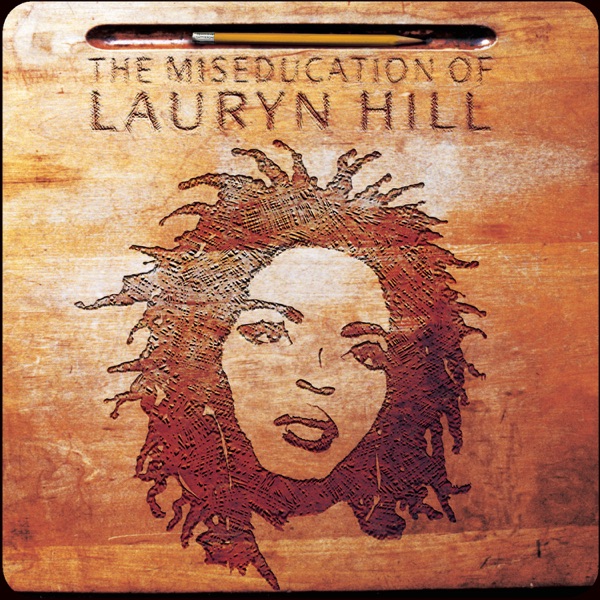
The Miseducation of Lauryn Hill · Lauryn Hill
Chianti Classico
"Soul, acidity, truth, earth, and emotional structure."
Blue · Joni Mitchell
Vin Jaune
"Solitude in a glass. Oxidative, unflinching, impossibly honest."
Songs in the Key of Life · Stevie Wonder
Demi-Sec Vouvray
"Joy with a wet stone underneath. Honey that never tips into sugar."
Back to Black · Amy Winehouse
Sercial Madeira
"Dry, sharp, salty grief. A voice that will not sweeten."
For Emma, Forever Ago · Bon Iver
Clairette de Die
"Cabin quiet, low-alcohol shimmer, the sweetness of surviving winter."
Not sure where to start?
Ask Jelena for Healing